Best Indian Diet Plan for Weight Loss (Vegetarian & Practical)
Why Most Weight Loss Diets Fail
In my clinical practice, one of the most common concerns I hear is:
“I am following a diet, but I am not losing weight.”
If you feel the same, you are not alone.
The issue is rarely about lack of effort. In most cases, the problem lies in:
- Poor nutritional balance
- Low protein intake
- Incorrect meal timing
- Unsustainable diet patterns
Weight loss is not about starving yourself. It is about eating the right foods in the right proportions.
This guide presents a simple, practical Indian vegetarian diet plan that is:
- Sustainable in daily life
- Based on real Indian eating habits
- Focused on fat loss while preserving muscle
Understanding Weight Gain: The Real Causes
Weight gain is not just about eating more—it is about what and how you eat.
Common contributing factors:- High carbohydrate intake (roti, rice)
- Low protein intake
- Excess tea, sugar, and milk
- Sedentary lifestyle
- Poor sleep and stress
An effective Indian vegetarian diet plan for weight loss must address all of these factors.
Core Principles of an Effective Weight Loss Diet
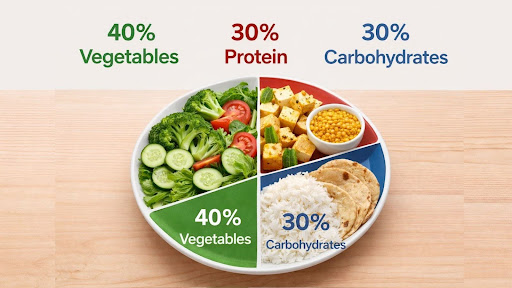
1. Balance Your Plate
A well-structured meal should include:
- 40% vegetables
- 30% protein
- 30% carbohydrates
This ensures satiety, better metabolism, and sustained energy.
2. Prioritize Protein Intake
Protein plays a crucial role in fat loss and muscle preservation.
Vegetarian protein sources include:
- Paneer
- Curd (dahi)
- Lentils (dal)
- Soya chunks
- Whey protein (if suitable)
Most Indian diets are protein-deficient, which slows down weight loss.
3. Maintain Proper Meal Timing
- Post-workout nutrition is essential
- Avoid late-night heavy meals
- Maintain consistency in eating patterns
Irregular eating can disrupt metabolism.
4. Stay Adequately Hydrated
Water supports digestion, reduces cravings, and improves metabolic function.
Aim for 2.5–3 litres daily
Sample Indian Vegetarian Diet Plan (Daily Routine)
Early Morning (5:30 – 7:00 AM)
- 2 glasses of warm water
- Optional: Green tea or black coffee
If exercising:
- 1 banana (optional)
Post-Workout (7:30 – 8:00 AM)
- 1 scoop whey protein
- 4–5 soaked almonds
Breakfast (9:00 – 10:00 AM)
Choose one:
- Oats with milk, banana, and seeds
- Paneer sandwich (whole wheat bread)
- Vegetable poha (low oil)
Ensure protein is included in your breakfast.
Lunch (1:00 – 2:00 PM)
- 1–2 rotis (avoid excess)
- 1 bowl dal or paneer
- 1 serving of vegetables
- Fresh salad
Avoid fried foods and excessive oil.
Evening Snack (5:00 – 6:00 PM)
- Roasted chana or makhana
- Fruit with a handful of nuts
- Green tea
Dinner (7:00 – 8:00 PM)
- Paneer / tofu / dal
- Vegetables or salad
Avoid heavy carbohydrates at night.
Before Sleep (Optional)
- A small glass of warm milk (if suitable)
❌ Common Mistakes That Slow Down Weight Loss
- Excessive milk consumption
- Overeating “healthy” high-calorie foods (e.g., peanut butter, dry fruits)
- Skipping meals and overeating later
- Ignoring protein intake
Why Your Diet May Still Not Be Working
If you are following a diet and still not seeing results, there may be underlying reasons such as:
- Hormonal imbalance
- Thyroid disorders
- Poor metabolic response
- Incorrect diet for your body type
Weight loss is not one-size-fits-all.
👩⚕️ Doctor’s Advice
As a clinician, I strongly advise against blindly following generic diets from the internet.
Each individual has a unique metabolism, lifestyle, and medical background.
A structured, medically guided plan ensures:
- Safe weight loss
- Sustainable results
- Better overall health
When Should You Consult a Doctor?
- Weight is not reducing despite consistent effort
- Persistent fatigue or weakness
- Excess abdominal fat
- Conditions like PCOS or thyroid imbalance
Start Your Personalized Weight Loss Journey
If you have been struggling with weight loss despite trying multiple diets, it may be time to take a scientific approach.
At DocGenie, our experienced doctors provide:
- Personalized diet plans
- Lifestyle and habit correction
- Continuous monitoring and support
Book your consultation today and take the first step towards sustainable weight loss.
Final Note
Weight loss is not about extreme restriction. It is about consistency, balance, and the right guidance.
If your progress has been slow, do not lose motivation. With the right approach, results are achievable.